Process note · Version 01
How we made this
The final essay did not begin with ants. It emerged from a conversation about an accident, then moved through reductionism, political sorting, the Overton window and finally collective behaviour.
The progression below reconstructs the visible conversation that produced the essay. It shows how each idea changed the next one, without treating any single stage as the complete explanation.
The starting event
A disturbing story arrives already framed
The conversation began with a TikTok story about a teenager in the UK who was impaled on railings during an interaction with police. Research established that the injury was real, but the public story immediately came packaged with questions of police conduct, restraint, blame and institutional investigation.
Shift: from “what happened?” to “how quickly does an event become an argument?”
The correction
Call an accident an accident
The next move was to resist an overly elaborate reading. People were struggling beside a dangerous fence, somebody was badly hurt, and there was no evidence that anyone intended the injury. Legal and procedural questions could still matter, but they did not have to replace the ordinary description of an accident.
Shift: separating responsibility from intention, and explanation from moral drama.
Reductionism
The parts can become more persuasive than the whole
The discussion then widened. A messy event can be broken into questions about force, arrest, procedure, risk, behaviour and institutional failure. Those questions are useful, but if they are stacked together carelessly they can produce a cleaner theory than reality deserves. Analysis can illuminate an event while also stripping away contingency, bad luck and ambiguity.
Shift: the real problem was not analysis itself, but mistaking an analytical slice for the whole event.
Compression
A haiku captured the idea
Broken into parts
The whole truth slips through our hands
Chaos needs no plot
Shift: the argument became simpler: decomposition can lose the shape of the thing being decomposed.
A second accident
Contingency does not always have a villain
A personal anecdote about someone on acid who died after jumping from a window when police arrived sharpened the distinction between a chain of causes and a single morally decisive cause. Many things can contribute to an outcome without any one of them fully explaining it.
Shift: causation is plentiful; deciding which causes deserve explanatory weight is the harder problem.
Democracy & sorting
The event becomes a membership test
The conversation then linked reductionism to political polarisation. In a two-pole environment, a complicated story can be compressed into a signal of affiliation: police abuse versus personal responsibility, authority versus victim, one camp versus the other. The story stops being only an event and starts telling people where to stand.
Shift: interpretation became a mechanism of social sorting.
The Overton window
The available interpretations can narrow
Once a culture repeatedly rewards a small number of interpretations, those interpretations begin to define what feels normal or sayable. The Overton-window connection was not about truth; it was about which explanations remain socially available. A ten-sided event can be publicly reduced to two acceptable readings.
Shift: polarisation does not merely divide answers; it can constrain the menu of answers.
A systems picture
Signals go in, decisions come out
A diagram was then introduced to think about how people and institutions receive partial information, simplify it, act on it and feed the consequences back into the world. The useful insight was retained in ordinary language: nobody receives reality whole; everybody acts on a compressed version of it.
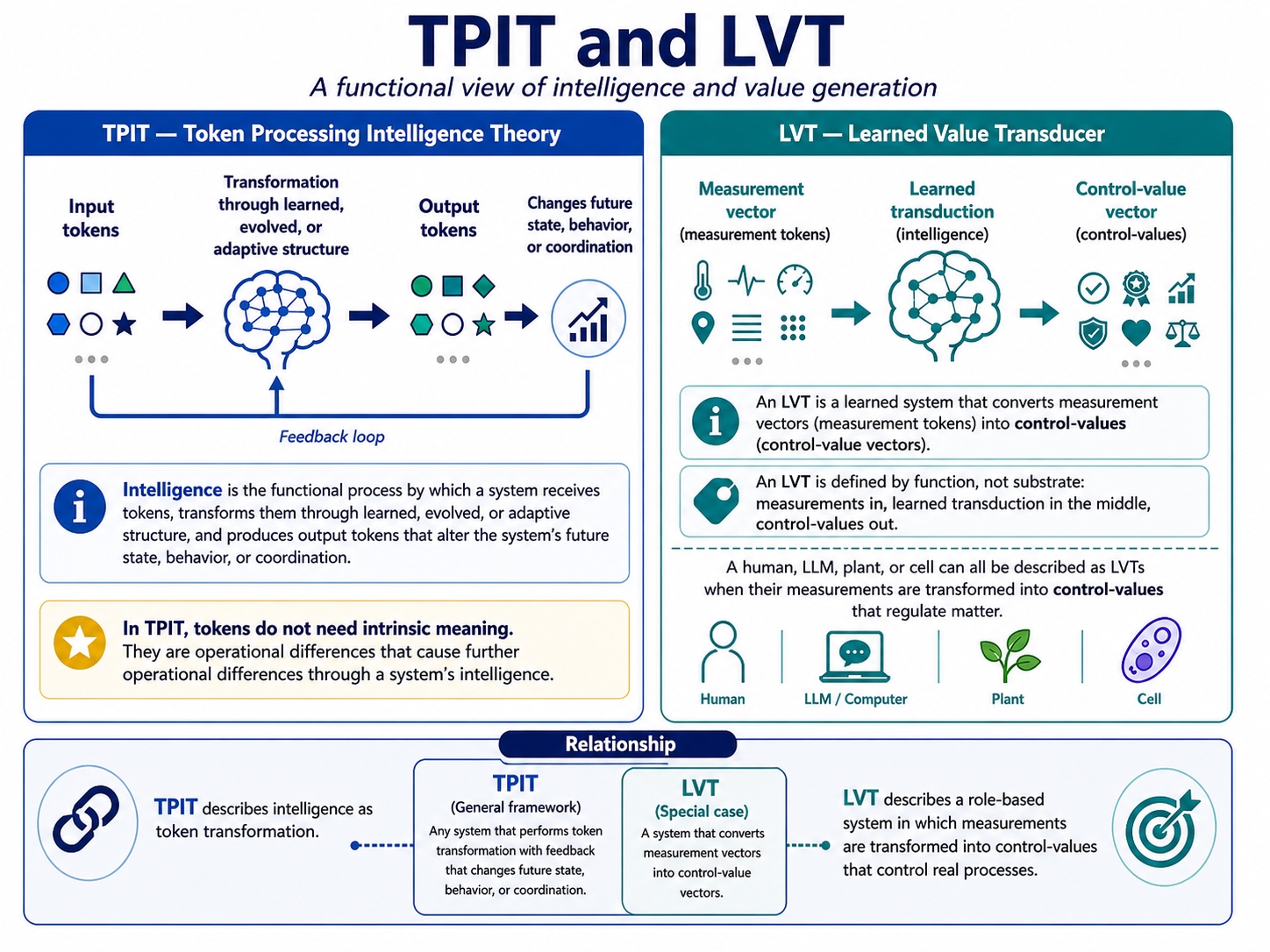
Shift: from “people have biased opinions” to “society is made of interacting signal-processing loops.”
The ant metaphor
No ant needs to understand the colony
That led to the central metaphor. An ant sees only its local environment, responds to signals and leaves new signals behind. The colony-level pattern emerges from millions of local actions. Human societies are incomparably richer, but the structural resemblance is useful: individuals react to fragments, imitate one another, reinforce trails and collectively produce outcomes that nobody designed.
Shift: polarisation, fashions, markets and public moods could all be understood as emergent patterns rather than centrally authored plans.
The final idea
We are ants who know we are ants
The metaphor only became interesting once the difference was added. Human beings can notice the trail. We can recognise that a headline, slogan or social cue is trying to sort us; we can ask what was omitted; and sometimes we can refuse to follow simply because everyone else is following.
That became the essay’s final claim: collective human behaviour can resemble a colony, but reflection gives us a limited capacity to inspect the signals guiding us. Philosophy, science and democracy are, in part, ways of exercising that capacity.
The whole journey in one sentence
A messy accident became a lesson in how humans simplify events, political systems turn those simplifications into sides, social signals reinforce the sides, and large-scale behaviour emerges from millions of people following local cues — except that, unlike ants, we can sometimes notice the trail.