Start with the curb
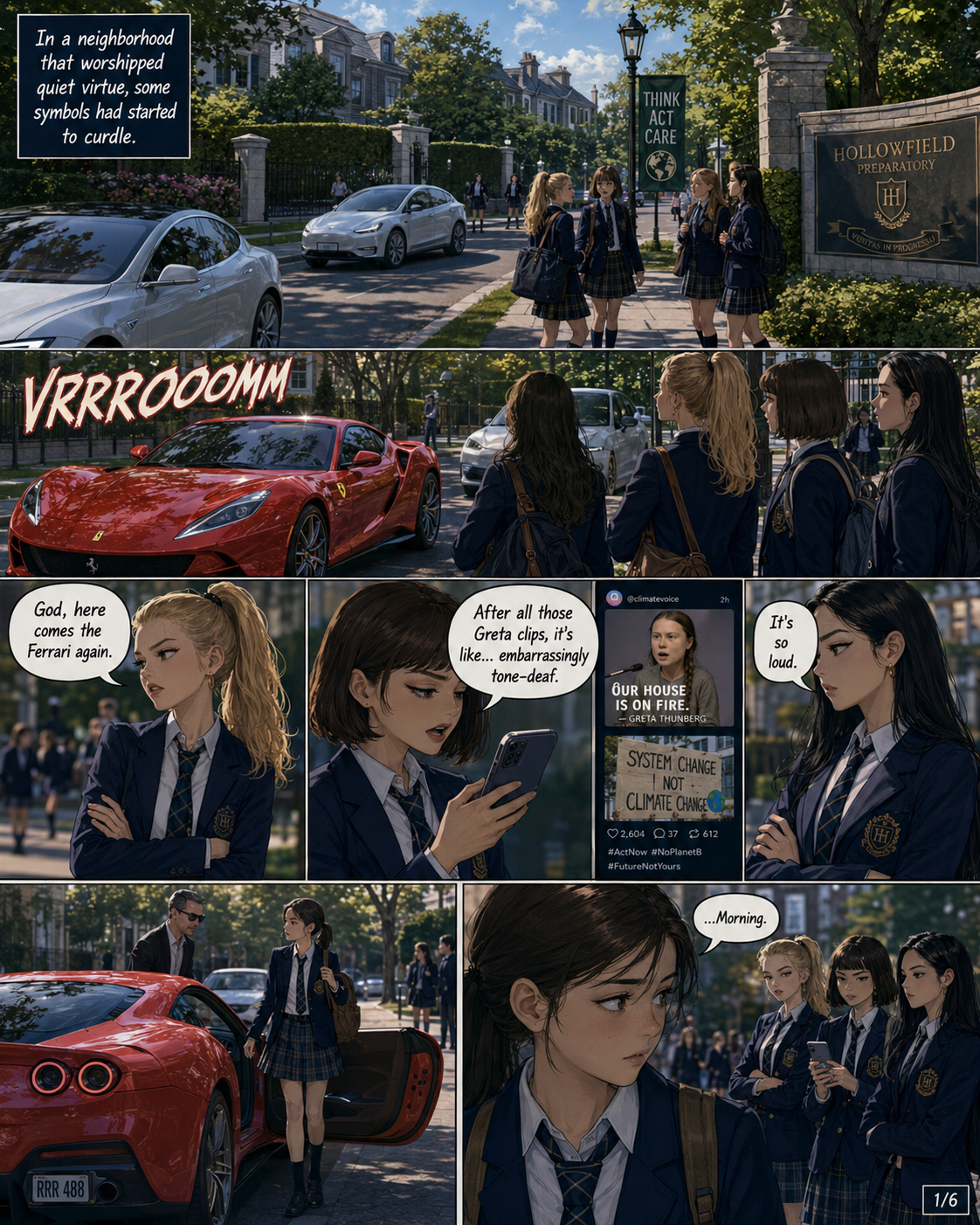
The red Ferrari arrives at school. Quiet EVs sit around it. The arrival is not just transport; it is a public event in a neighborhood that increasingly treats quiet as refinement.
Separate Site · V05
How the quiet-luxury thesis became a comic story about children, social pressure, Greta-era climate culture, and the recoding of noise as embarrassment.
The first site ended with the clean thesis: electric cars appeal to affluent neighborhoods because they make rich places quieter. This separate site tells the making-of story behind the comic version of that idea.
The missing human layer was not the car itself. It was the school run. A Ferrari can be a private pleasure for the parent, but it is also a public signal delivered at the curb. The child steps out of the symbol before they have had any chance to choose it. In a culture where climate language moves through phones, classmates, and status games, that symbol can become socially loaded very quickly.
What changed
The earlier argument treated engine noise as local pollution. The comic story keeps that point but follows the social consequence: once loud combustion luxury starts to read as crude, selfish, or out of date, the child attached to it can become the one who absorbs the judgment.
What stayed
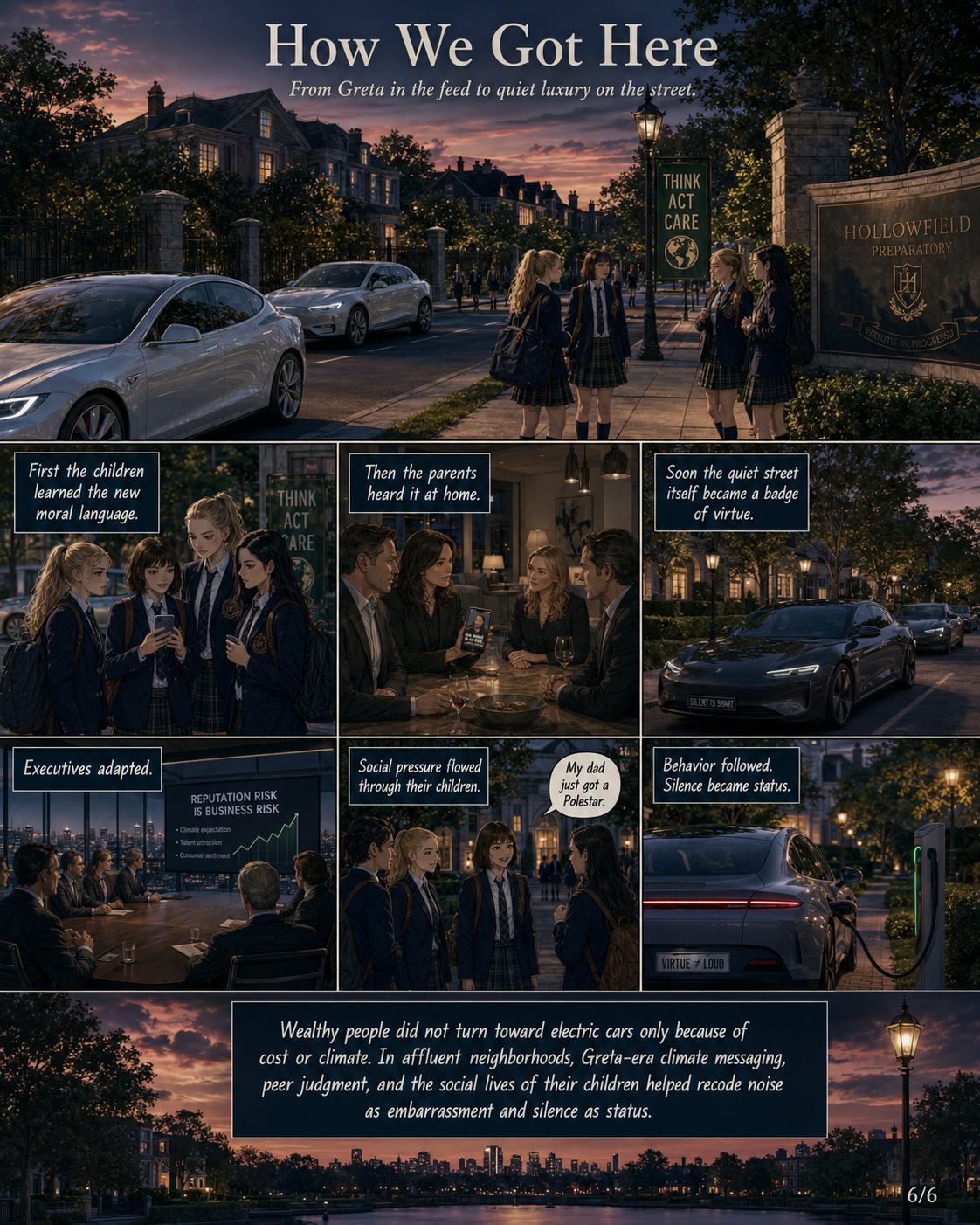
The story does not replace the original website. It sits beside it. The original site explains the preference; this site dramatizes the channel through which the preference spreads: children notice the code first, parents hear it at home, and executives translate it into image, policy, and product decisions.
The crucial turn was removing the visible framework and letting the social mechanism carry the argument.
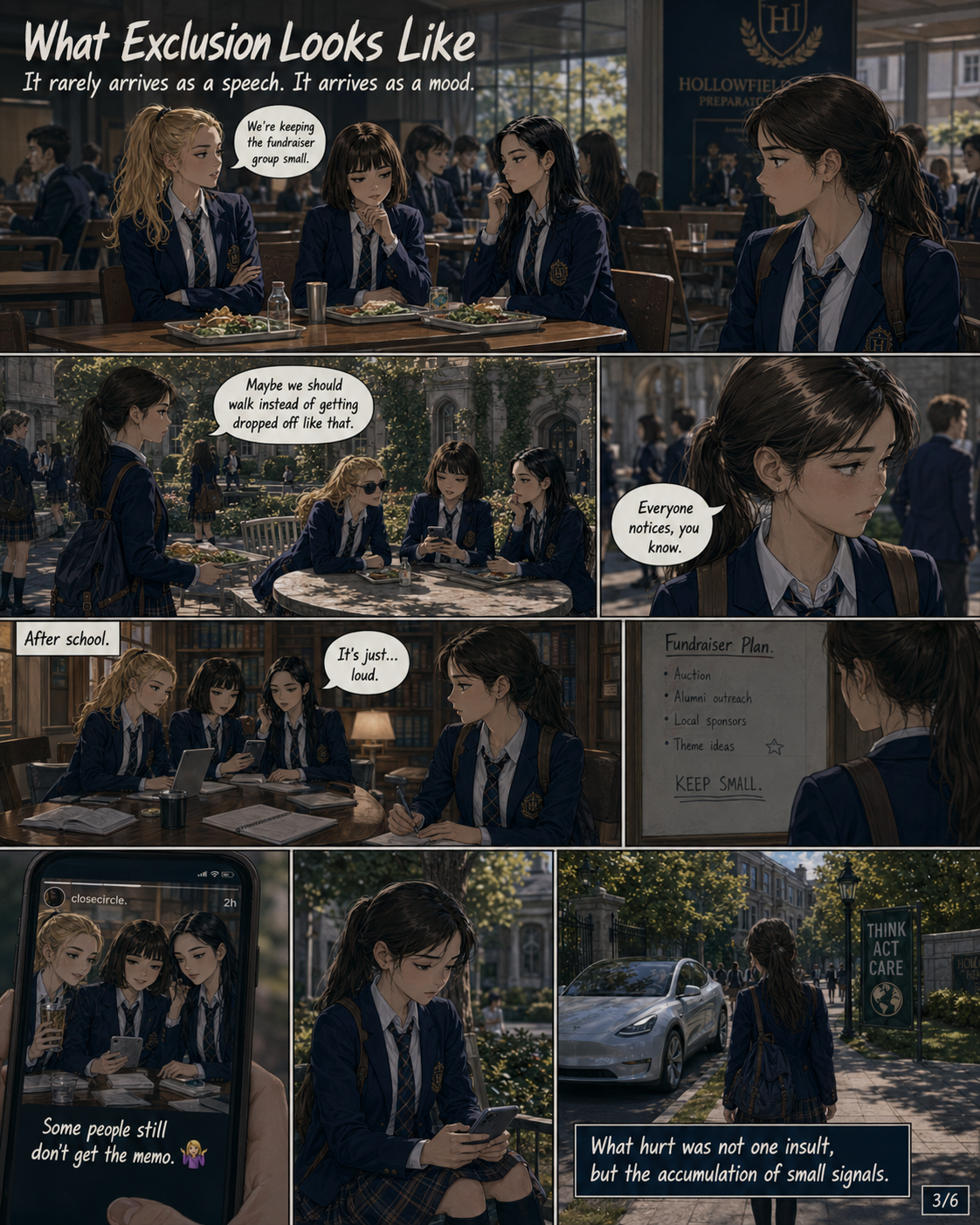
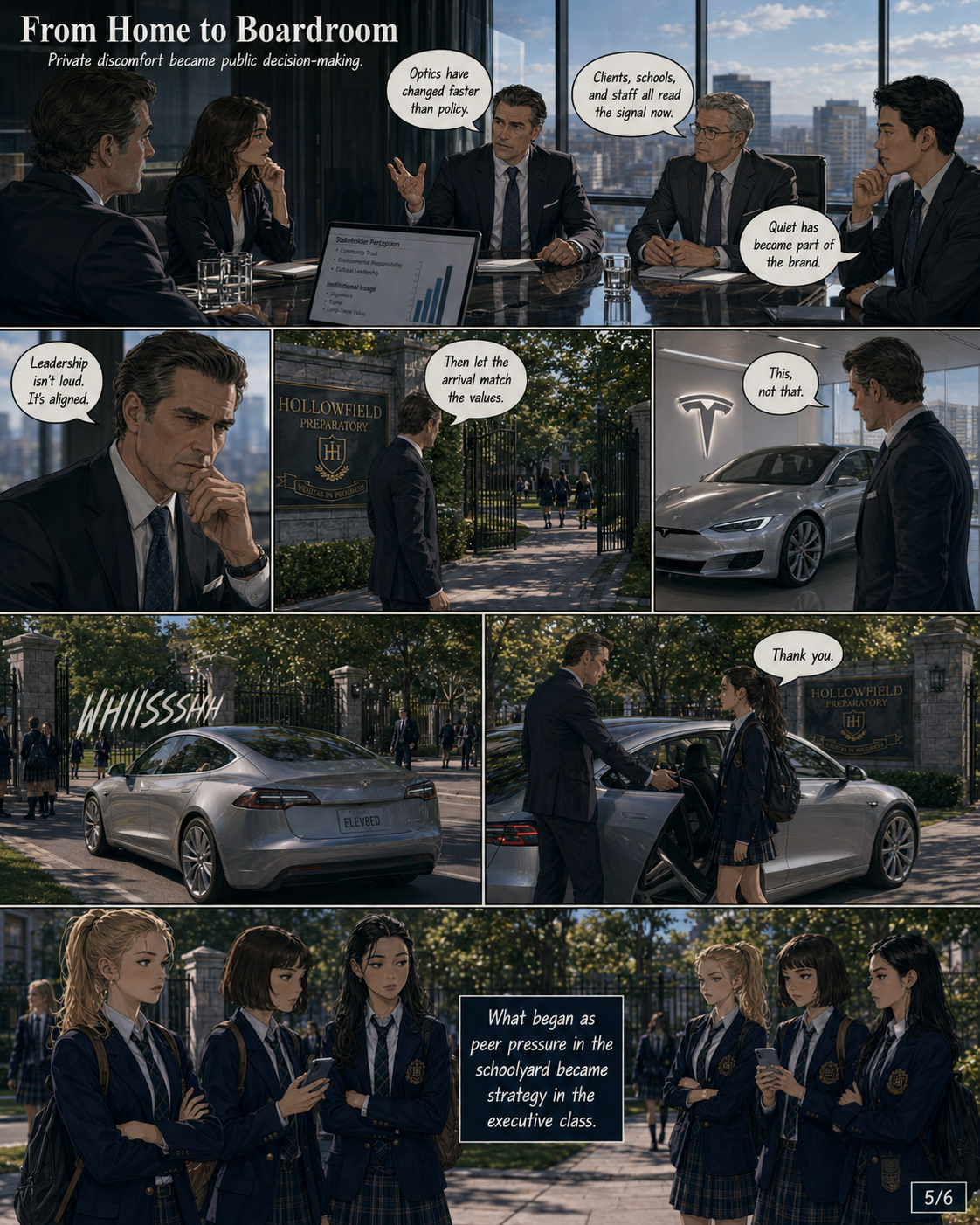
Instead of diagrams, the final product needed recurring characters, phones, school uniforms, private-school hierarchy, edited invitations, group chats, and a father who realizes that the Ferrari has become a liability in his daughter’s social world. Greta appears not as a villain but as part of the cultural feed: a moral vocabulary that teenagers can absorb, simplify, weaponize, and convert into status judgments.
The red Ferrari arrives at school. Quiet EVs sit around it. The arrival is not just transport; it is a public event in a neighborhood that increasingly treats quiet as refinement.
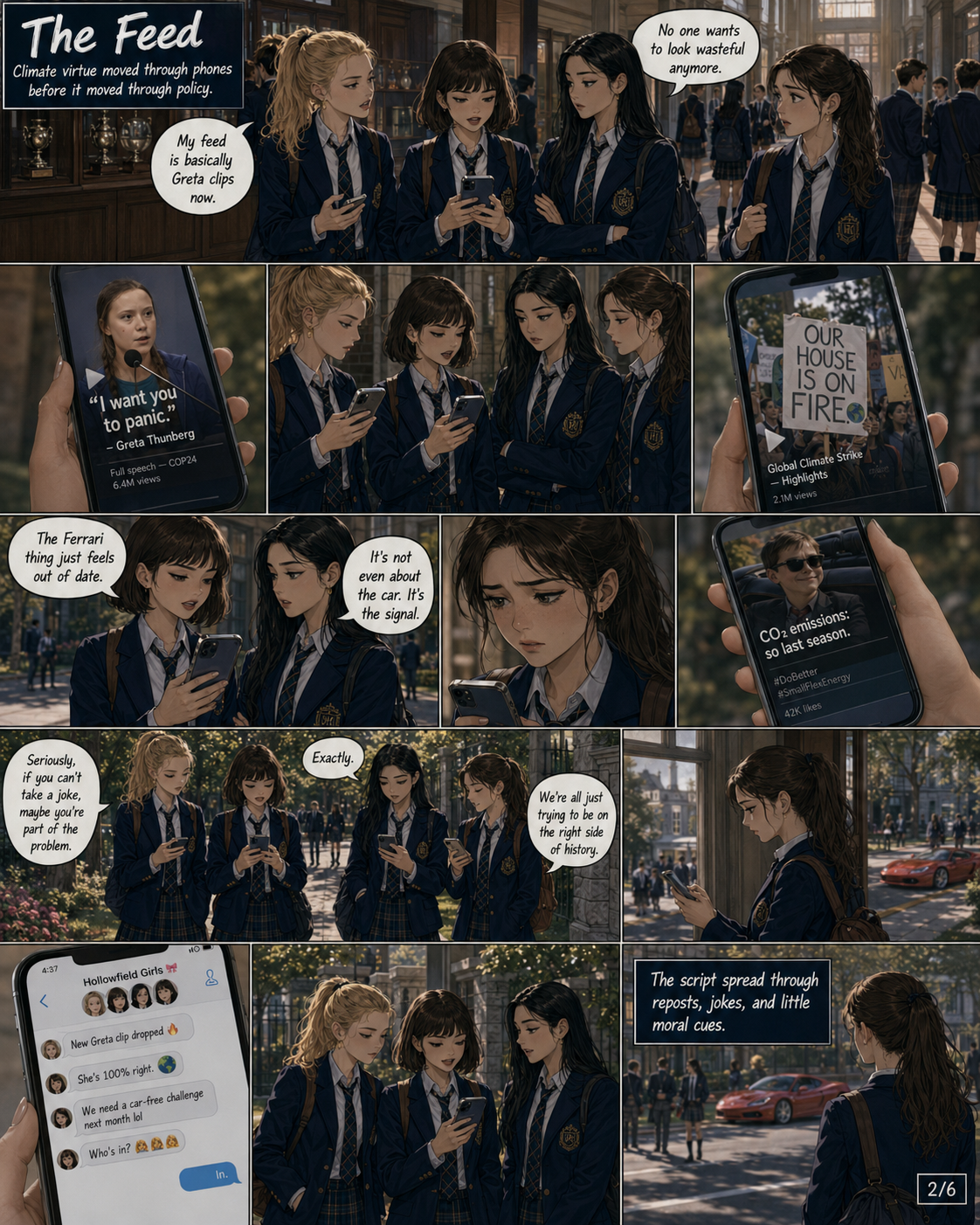
The girls’ phones carry Greta clips, climate slogans, reposts, and jokes. Climate concern becomes social language, and social language becomes a way to rank families.
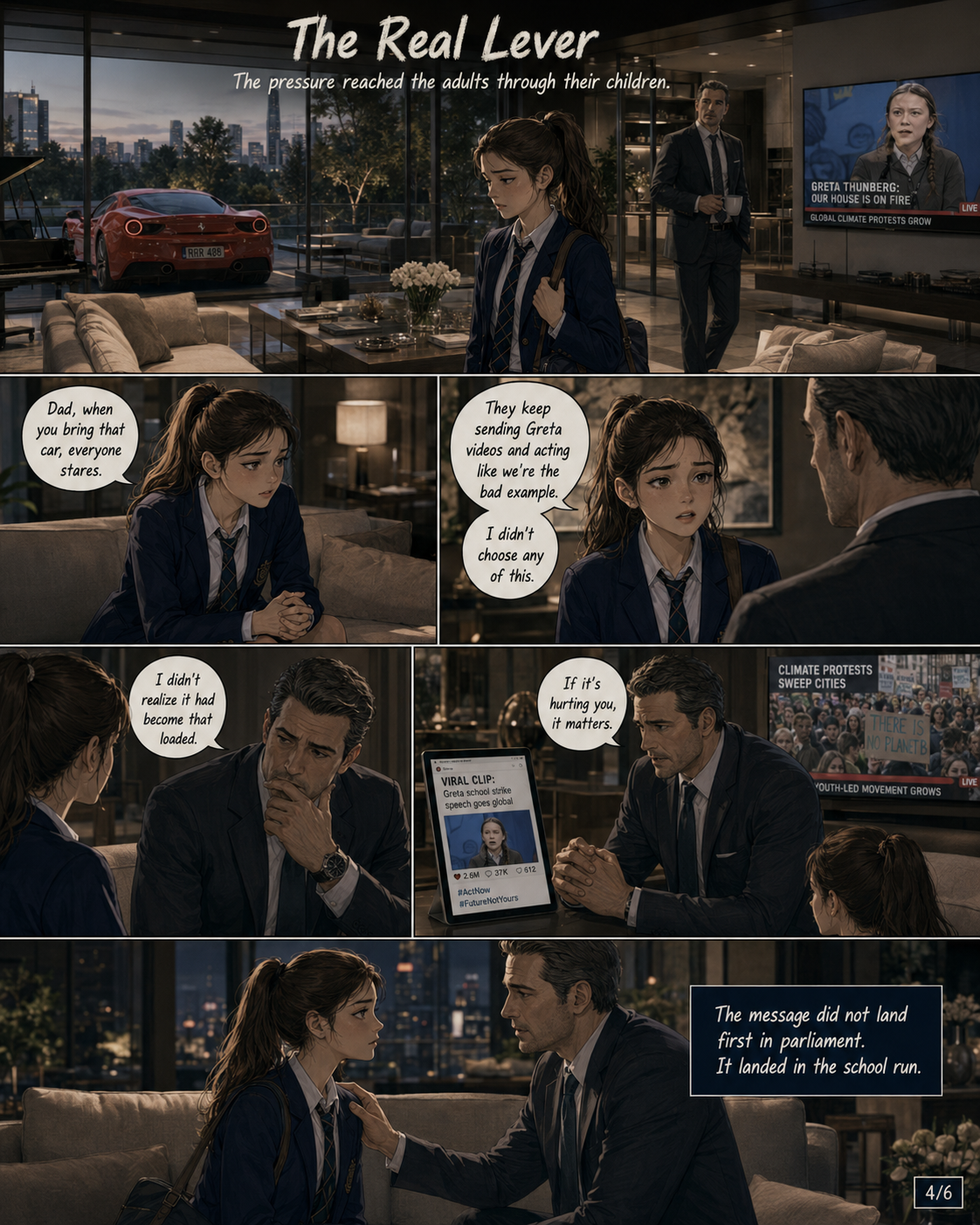
The daughter tells her executive father what the car now means at school. The private hurt becomes an adult signal. The boardroom follows the schoolyard.
Final Product
The finished piece is a story of cultural pressure moving through children before it becomes adult behavior. It ends with the same core claim as the V01 website: in affluent neighborhoods, noise becomes embarrassment and silence becomes status.