stage 01
Framework reading
The transcript was initially read as a study of how companion platforms shape users and how hidden labour supports AI systems.
This page records the movement from a transcript analysis to a structural account of attention entrepreneurship—and acknowledges that the website itself performs the same conversion.
The first reading treated the interview as a critique of AI companions and hidden labor. The interpretation then moved toward the interviewee as an engagement actor, then toward his place in a wider anti-AI narrative pipeline. The final correction removed unnecessary intentionality: nobody had to design the system. The interviewee was well positioned when critical AI narratives became valuable, and the ecosystem selected and reinforced him.
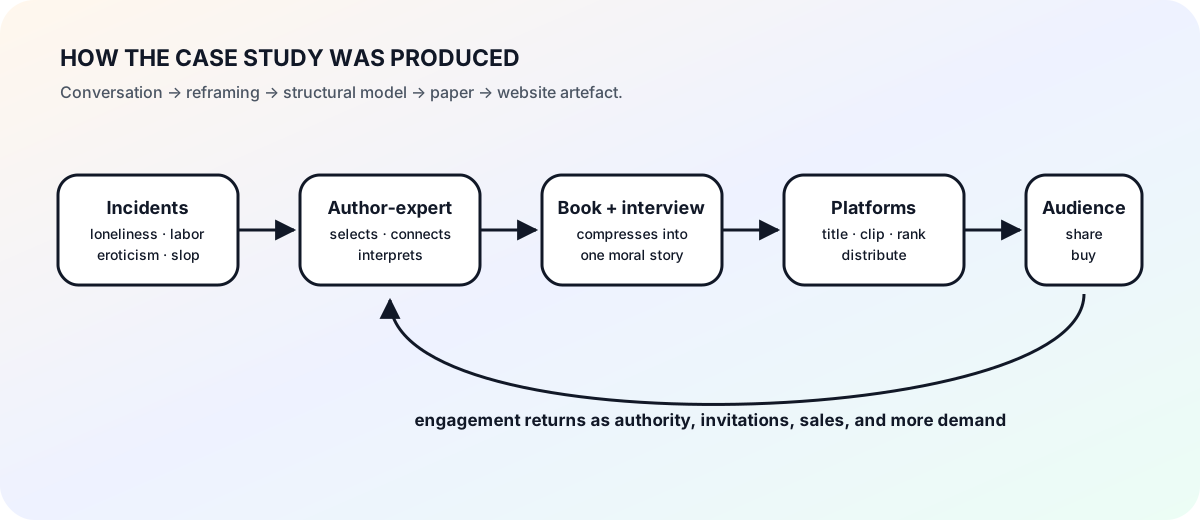
The transcript was initially read as a study of how companion platforms shape users and how hidden labour supports AI systems.
The interviewee was reintroduced as a participant in the attention system rather than a transparent observer standing outside it.
His work was placed inside a broader anti-AI media chain linking authors, hosts, publishers, platforms, and ideologically receptive audiences.
The explanation shifted from deliberate engagement farming to emergent selection. Sincere local actions can still produce a directional media ecosystem.
The case was named media slop: not necessarily false or stupid, but compressed into the shape most useful to an attention market.
The conversational idea became a research paper, then a native HTML artifact with references, diagram, contents navigation, and downloadable document.
This artifact studies the conversion of a provocative interpretation into a polished intellectual product. It also performs that conversion. A conversational claim was expanded into a formal case study, placed in an academic layout, supplied with references, and added to a branded collection. That does not invalidate the paper. It makes the production process part of the evidence.
index.html renders the media-slop case study.
The homepage was broadened from a single three-paper democracy experiment into a site about the production of tasty slop itself. The original three papers now form a credential-slop collection. The new paper begins a media-slop collection concerned with how narratives are selected, compressed, credentialed, and circulated.